Have you ever felt unsure how to properly address a tenant complaint while staying within legal boundaries? As a property manager in Scotland, I’ve learned that how you handle tenant complaints can make all the difference — not just for tenant satisfaction, but also for your legal responsibilities. Scotland has specific regulations that both landlords and property managers must follow when dealing with complaints.
Whether it’s about handling property maintenance, disputes with noisy neighbours, or complaints about property management practices, handling tenant complaints professionally ensures tenant satisfaction, legal protection, and effective property management. In this guide, we will focus on the specific rules and regulations governing tenant complaints in Scotland and how landlords and property managers can handle these complaints effectively while maintaining professionalism.
Common Types of Tenant Complaints
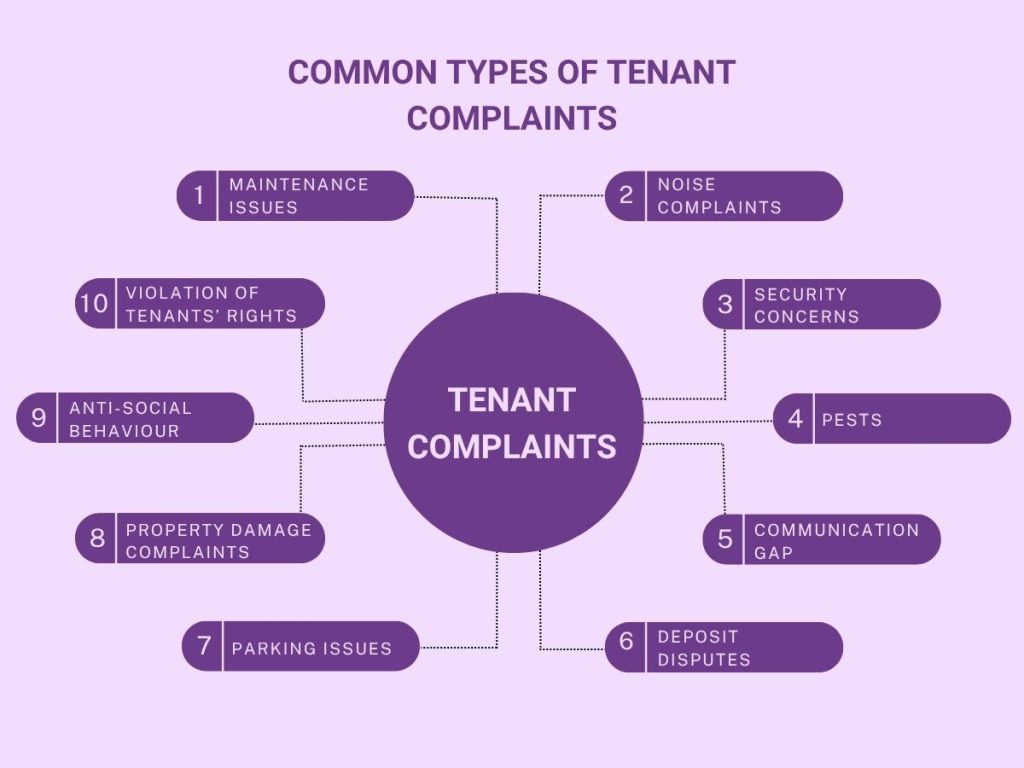
When it comes to tenant concerns, property managers and landlords in Scotland often face a variety of issues that, if not handled properly, can harm tenant satisfaction and the property’s reputation. A clear complaints procedure ensures these issues are addressed fairly and consistently, giving tenants confidence that their concerns will be taken seriously and managed professionally. Below are the 10 most common tenant complaints and guidance on how to handle them effectively.
- Maintenance Issues: Maintenance problems, such as plumbing leaks, appliance breakdowns, or poorly maintained landscaping, are among the most common tenant complaints and can frustrate tenants while affecting their living experience. To prevent this, property managers should prioritize quick response times, schedule regular property checks, and work with reliable contractors to handle maintenance and repair requests efficiently, following landlord best practices to keep properties in good condition and tenants satisfied.
- Noise Complaints: Complaints about excessive noise, loud music, or disruptive gatherings are very common in rental communities. These disturbances can negatively impact neighboring tenants and create tension. Clear property rules and communication can help resolve these issues professionally.
- Security Concerns: Tenants rightly expect to feel safe in their homes, and security-related complaints often arise from broken locks, poor lighting in communal areas, or malfunctioning security systems. Addressing these concerns promptly is essential, as it impacts both tenant comfort and health and safety. Upgrading safety features and working with qualified service providers helps ensure a secure living environment and demonstrates a commitment to maintaining proper health and safety standards.
- Pests: Pest problems like bed bugs, cockroaches, mice, vermin, and other rodents are common reasons for tenant complaints. These issues require immediate attention, as ignoring them can lead to infestations that affect tenant health and quality of living. In some cases, unresolved pest problems may be reported as a formal complaint to housing associations or local councils, highlighting the importance of prompt action.
- Communication Gap: A lack of clear, communication often leaves tenants feeling ignored, especially when it comes to sensitive matters like rent increases. Unexpected or poorly explained rent hikes can cause frustration and disputes, affecting both tenant retention and rental income stability. Property managers should maintain open, professional communication and provide fair, legal, and well-documented reasons when adjusting rent to maintain trust and avoid conflicts.
- Deposit Disputes: At the end of a lease, disputes over tenancy deposit deductions are a common source of tenant–landlord disputes. These often arise when documentation or inspection reports are incomplete. By maintaining thorough move-in and move-out records, supported by photographs, property managers can handle deposit deductions transparently and fairly, reducing the risk of disputes and ensuring both parties understand the process.
- Parking Issues: Limited parking spaces, poorly assigned spots, or disputes over visitor parking frequently cause tenant complaints. These problems can create tension between tenants and disrupt daily routines. A well-organized parking policy with clear guidelines can help prevent misunderstandings and disputes.
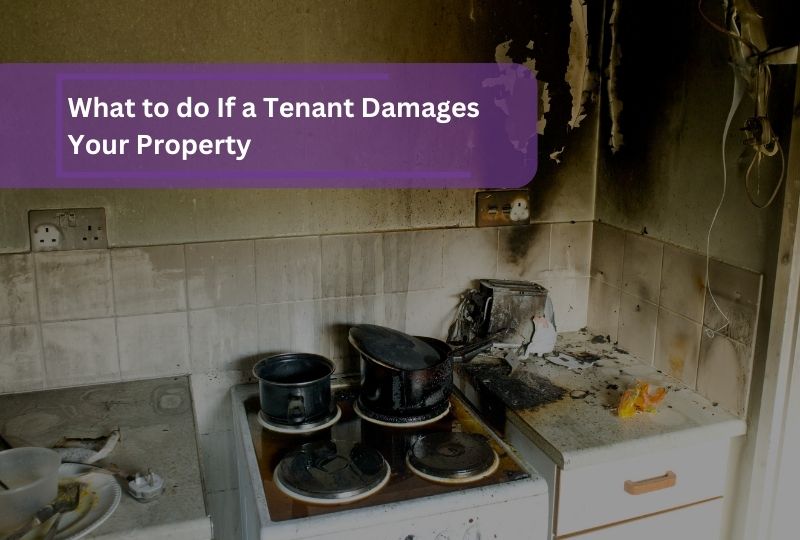
- Property Damage Complaints: Tenants often complain about damage to the property, whether from previous tenants, accidents, or general wear and tear. Immediate action to inspect and repair the damage is important to keep tenants satisfied. Regular property checks and clear maintenance procedures help avoid larger problems.
Also Read: What to do if the property damage is caused by your tenant? - Anti-Social Behaviour: Tenants may report harassment, illegal activities, or disruptive behavior from neighbors, which creates an unpleasant living environment. These situations require swift and fair action to protect the community’s safety and well-being. Clear property rules and legal enforcement options should be applied when necessary.
- Violation of Tenants’ Rights: Unannounced entries into rental units or neglecting tenancy laws often lead to serious tenant complaints. Tenants have legal rights to privacy, proper notice, and respectful treatment. Following local tenancy laws and understanding landlord responsibilities, while maintaining clear and respectful communication, helps prevent legal conflicts and fosters better relationships with tenants.
Why Handling Tenant Complaint Matters?
Effectively handling tenant complaints is essential for landlords and property managers to build positive relationships and manage properties smoothly. When tenant concerns are taken seriously and addressed promptly, it prevents conflicts, keeps good tenants, and maintains the property’s value. Tenants who feel acknowledged and see their issues resolved quickly are more likely to renew leases, reducing costly turnover and vacancy rates. This is why understanding key strategies for managing rental properties can make a real difference in day-to-day property management.
Timely complaint handling also prevents minor issues like leaks, pests, or maintenance problems from escalating into bigger, more expensive repairs. Being proactive protects the overall condition of the property and ensures a safer, more comfortable environment for tenants. Furthermore, a reputation for fairness and responsiveness in dealing with tenant complaints helps property managers attract reliable, long-term tenants and supports the growth of a successful rental business.
Beyond avoiding disputes, managing tenant complaints well brings long-term benefits. It improves tenant relationships, encourages open communication, and builds trust, making tenants more likely to report problems early and cooperate with property rules. It also reduces legal risks, ensures compliance with local housing laws, and strengthens your credibility as a responsible property manager. In the long run, clear complaint procedures and professional handling lead to smoother property operations, fewer recurring problems, and a strong reputation in the rental market.
10 Steps To Deal With Tenant Complaints in Your Rental Properties
A structured complaint-handling procedure is the cornerstone of effective property management. Here’s how landlords in Scotland can develop and implement such a system to handle complaints:
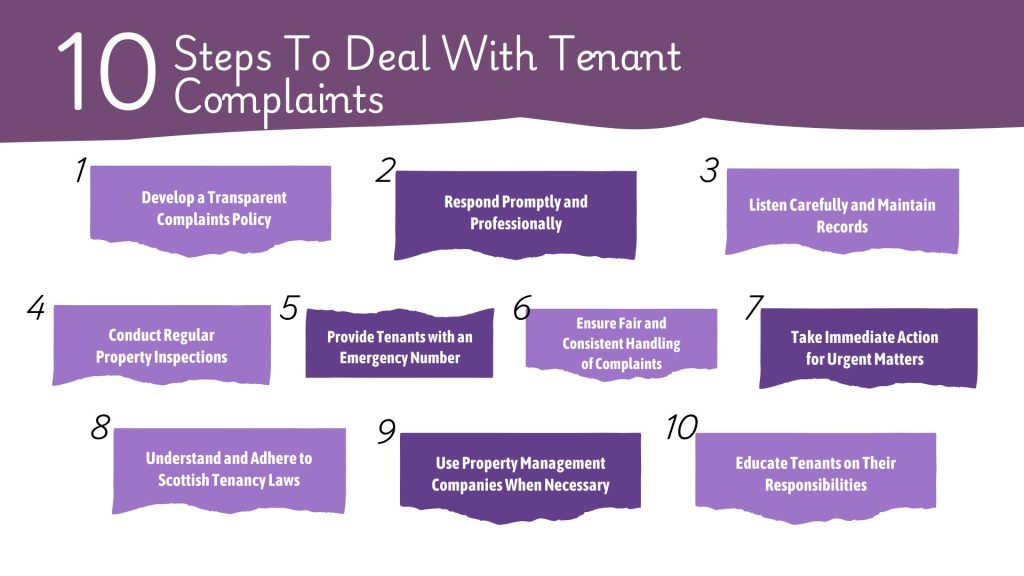
1. Develop a Transparent Complaints Policy
A clear and accessible formal complaints procedure is essential for effective property management. This policy should be easy for tenants to find, such as in the tenancy agreement or displayed in communal areas. It should explain how tenants can submit a formal complaint, including proper channels like email, mail, or online forms, and provide the necessary contact details. Tenants should give detailed descriptions of their concerns, including dates, times, and supporting documentation like photographs. The procedure should also set clear timelines for acknowledging complaints and providing resolutions, ensuring transparency and efficiency in handling tenant issues.
2. Respond Promptly and Professionally
Professional and prompt responses are important in preventing disputes from escalating. When dealing with issues reported by tenants, acknowledge their issues early and give a clear timeframe for resolution. Respectful and open communication is essential in ensuring tenants are heard and respected throughout the process.
3. Listen Carefully and Maintain Records
Knowing the details of the complaint helps you handle it efficiently. Avoid assigning blame and instead focus on finding solutions. Document all the complaints and note the dates, interactions, and actions taken. Tracking repeated complaints will help you identify unresolved matters and patterns, which enables more efficient management.
4. Conduct Regular Property Inspections
Preventative maintenance is one of the most effective means of reducing complaints from tenants. Through regular inspection of the properties, you are in a position to detect potential issues early enough before they can develop into problems. Regular checks ensure the observance of rigid compliance with Scottish tenancy law and health laws. Also, regular inspections like pest management and plumbing checks prevent complaints before they arise.
5. Provide Tenants with an Emergency Number
As communication is the foundation of tenant satisfaction, having an emergency contact for significant issues such as gas leaks, flooding, or electrical failures is crucial. Tenants should have immediate access to an emergency contact number. Describe the process of dealing with emergencies so that tenants know what to expect and can have confidence that their complaints are being addressed.
6. Ensure Fair and Consistent Handling of Complaints
Managing tenant complaints is essential for maintaining tenant satisfaction and protecting property value. Consistency and fairness are crucial when addressing each concern, and landlords and property managers should consider each complaint seriously and resolve it in a systematic, impartial way. A clear complaints procedure ensures that all tenants are treated equally and no concern is overlooked. When needed, mediation can be used as part of this procedure to settle disputes amicably, maintaining trust and credibility with tenants.
7. Take Immediate Action for Urgent Matters
Certain complaints require immediate attention, especially those related to essential services like heating or electricity. Such complaints need to be addressed to prevent tenant discomfort or even safety concerns. If the dispute escalates out of control, it is advisable to consult a legal professional. Prompt action on serious issues, such as security issues, also helps a great deal in maintaining tenant comfort and satisfaction.
8. Understand and Adhere to Scottish Tenancy Laws
In Scotland, the Private Residential Tenancy (PRT) legislation sets out the tenant rights and the duties of landlords. Knowing and following these landlord responsibilities is important to avoid legal issues and maintain a good tenant relationship. These responsibilities include keeping security deposits in a government-approved scheme and making sure repairs meet the Repairing Standard. If the landlord fails to resolve noise complaints, tenants can report the issue to the environmental health team of the local council.
9. Use Property Management Companies When Necessary
Managing a property can sometimes become overwhelming, especially with multiple tenants or ongoing issues. Landlords can hire a property management company to handle routine tasks like complaints and maintenance, ensuring prompt responses and maintaining records. They can provide you with a shield of protection under the law and assist you in avoiding risks such that you are in good books as a landlord and tenants remain satisfied. A satisfied tenant is key to achieving a harmonious and profitable rental experience.
10. Educate Tenants on Their Responsibilities
Preventive education is an effective way to reduce avoidable complaints. Encourage tenants to report maintenance issues early before they escalate. Ensure that tenants know their roles, such as cleanliness, staying away from anti-social behaviour, and the rent increase and communal area maintenance policy. Clear communication of expectations can significantly reduce conflicts and misunderstandings.
Preventive Measures to Reduce Complaints
Property tenants management isn’t just about responding to issues — it’s about preventing them. By setting clear expectations, maintaining open communication, and addressing problems early, landlords and property managers can significantly reduce the number of tenant complaints they receive. Here are some effective preventive measures for handling tenant complaints before they happen:
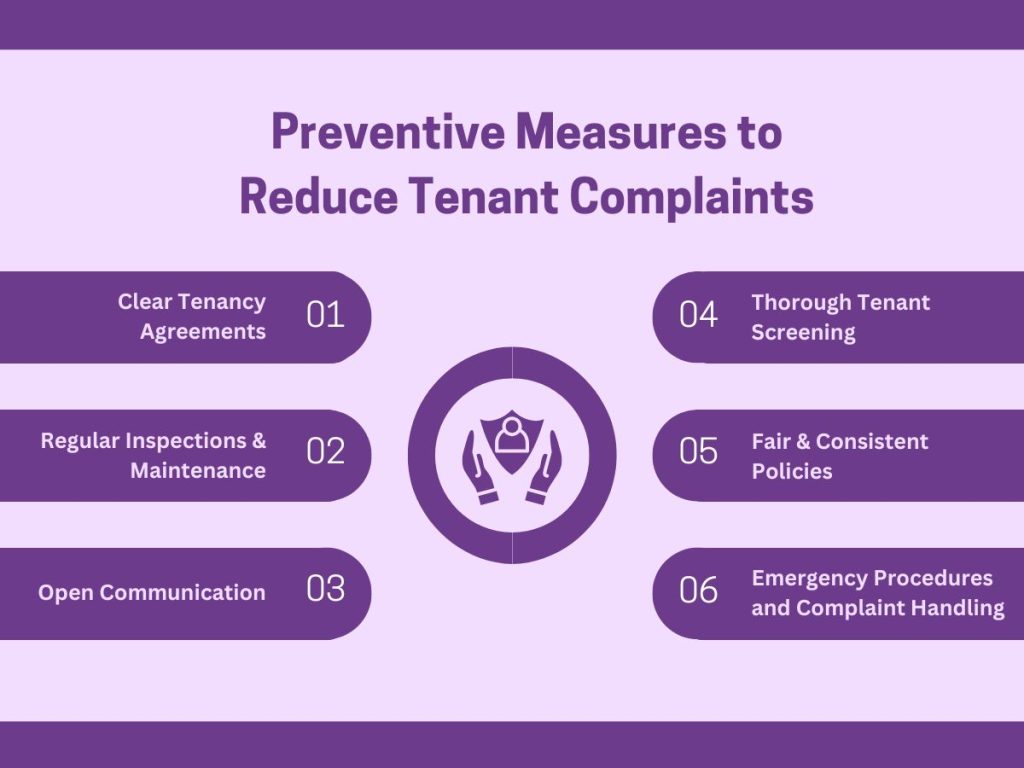
- Clear Tenancy Agreements: A well-drafted tenancy agreement is the foundation of successful tenant management. It should clearly define rent amounts, payment deadlines, maintenance responsibilities, property rules, and complaint handling procedures. When tenants fully understand their rights and obligations from the start, misunderstandings and tenant complaints are less likely to occur.
- Regular Inspections & Maintenance: Conducting routine property inspections is a proactive way to prevent common tenant complaints related to maintenance and safety. Regular checks help identify and resolve issues like plumbing problems, pest infestations, or electrical faults before tenants report them. Staying ahead with scheduled maintenance also keeps the property in good condition and tenants satisfied.
- Open Communication: Maintaining clear and consistent communication is one of the most effective ways to reduce tenant complaints. Keep tenants informed about property policies, updates, upcoming repairs, or changes in rent terms. Providing multiple ways for tenants to contact you and responding promptly to their concerns builds trust and encourages a positive landlord-tenant relationship.
- Thorough Tenant Screening: A comprehensive screening process can prevent many tenant complaints related to noise disturbances, unpaid rent, and property damage. By verifying tenant backgrounds, employment history, rental records, and following a detailed referencing checklist, landlords can select responsible, reliable tenants who are less likely to cause issues or disrupt other residents.
- Fair & Consistent Policies: Consistent enforcement of property rules and fair handling of tenant complaints fosters a sense of security and fairness among tenants. Apply policies equally to all tenants to avoid disputes and accusations of favoritism. Following local tenancy laws and regulations while maintaining fairness helps create a balanced, respectful rental environment.
- Emergency Procedures and Complaint Handling: Clearly communicating emergency procedures and handling tenant complaints is essential for tenant safety. By providing written guidelines explaining what tenants should do in case of emergencies like fires, plumbing failures, or security breaches. Also, outline the process for lodging formal complaints and how these will be handled, ensuring transparency and accountability.
What Is the Time Frame for Landlords to Handle Tenant Complaints in Scotland?
In Scotland, landlords need to follow the Private Rented Housing (Scotland) Act 2011 when responding to tenant complaints, especially when it comes to property conditions or repairs. For urgent repairs, landlords are expected to take care of them within 1 to 3 days, depending on how serious the issue is.
For non-urgent repairs, they typically have up to 10 to 20 working days to get them done. When it comes to general complaints, landlords should aim to respond within 5 to 10 working days. It’s also important for landlords to stick to any timelines specified in the tenancy agreement, as these might outline different response times for specific issues.
Final Thoughts:
Complaints from tenants can be difficult to handle, but with the proper approach, they can be resolved peacefully. A clear comprehension of the problem, active listening, and solution-finding are necessary for resolving the issue effectively. Effective complaint handling involves clear communication, consistency, fairness in approach, and adherence to Scottish tenancy legislation.
At Westport Property, we understand the importance of tenant satisfaction and the need for prompt, professional solutions. By ensuring a positive renting experience and safeguarding rental property investments, landlords can maintain long-term, successful tenancies. By following these strategies, landlords can turn complaints into opportunities, fostering a positive landlord-tenant relationship that benefits all parties involved. If legal advice is needed, seeking expert guidance ensures the process of addressing complaints complies with Scottish law.
Have A Question or Need Some Help?
Whether you're searching for the perfect rental property or a landlord wanting advice on letting, we're here to assist. Feel free to call our office or send us an email, and we'll be happy to help you with any queries you may have.
FAQs:
What should you do if you receive complaints from a tenant?
Listen carefully to the complaint, understand the issue, and respond within 5 to 10 working days. For repairs, handle urgent issues within 1 to 3 days and non-urgent ones within 10 to 20 working days. Follow any timelines in the tenancy agreement and communicate clearly.
Can you complain about the tenant?
Yes, landlords can complain about tenants for violations like non-payment of rent or property damage. Legal steps can be taken if the issue isn't resolved through communication.
What is a complaint handling failure order?
A complaint handling failure order is issued when a landlord doesn't resolve tenant complaints properly or within the required time frame, potentially leading to legal action or tribunal involvement.
How to respond to a tenant complaint letter?
When a tenant submits a complaint letter, acknowledge it promptly and thank them for reaching out. Investigate the issue carefully, gather the necessary details, and respond with a clear, polite explanation of the outcome. If possible, offer a reasonable solution or adjustment to address their concern and maintain a positive relationship.
Can tenant file complain against landlords?
Yes — tenants can file complaints against landlords if their rights are violated or serious issues are ignored. Common reasons include unsafe living conditions, unfair rent increases, illegal property entry, or unresolved maintenance problems. Complaints can be filed with local housing authorities, consumer protection offices, or tenancy boards, depending on local regulations.
What are the 5 stages of complaint handling?
Complaint handling usually follows five stages. First, the complaint is acknowledged so the tenant knows it has been received. Next, it is assessed to understand the issue and plan the response. The third stage is investigation, where facts are gathered and evidence is reviewed. Then comes resolution, where action is taken to solve the problem and the outcome is shared with the tenant. Finally, a follow-up ensures the solution worked and prevents the issue from happening again.
When should I go to Property Ombudsman?
You should go to the Property Ombudsman if you’ve already raised a formal complaint with your letting agent or property manager and it hasn’t been resolved within 8 weeks, or if you’re unhappy with their final response. The Ombudsman acts as an independent body, reviewing disputes fairly and helping when the agent’s own complaints process doesn’t lead to a solution. It’s the next step once you’ve tried to sort things out directly with your landlord or agent.
 Find a Property Sale/Rent
  Property Management
  Tenant Background Screening
  Asset Management