Energy efficiency is becoming more important for both homeowners and landlords across Scotland. Whether your goal is to lower energy bills, make your property more appealing to reliable tenants, or invest in long-term improvements, raising your EPC rating is one of the most effective steps you can take.
Although Scotland currently doesn’t set a minimum EPC requirement for rental properties, landlords are still required to provide a valid certificate when advertising or starting a tenancy. With the Scottish Government reviewing future energy standards, taking action now can help you avoid expensive upgrades later and ensure your property stays competitive in the market.
In this guide, you’ll find a clear explanation of how EPC ratings work in Scotland, along with practical and affordable ways to enhance your property’s overall energy performance.
What Is an EPC Rating and Why Is It Important for Landlords?
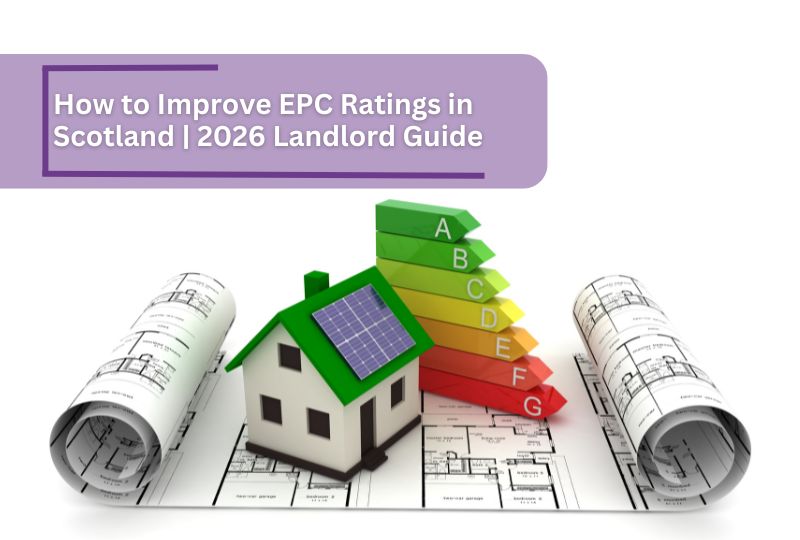
An Energy Performance Certificate (EPC) is a government-issued document that provides an official assessment of a property’s energy efficiency, rating it on a scale from A (most efficient) to G (least efficient), and it is required by law when selling or renting properties and it includes estimated energy costs, carbon emissions, recommended improvements, and potential rating after upgrades.
In Scotland, there’s no minimum EPC rating, so even F or G-rated homes can be rented legally. Landlords must provide a valid EPC when advertising or starting a tenancy, with certificates valid for 10 years and assessed by an accredited professional.
Having a clear EPC rating helps landlords understand the benefits of energy efficiency, both for tenants and for the property itself. These benefits include:
- Lower energy bills: Tenants spend less on heating and electricity in energy-efficient homes.
- Easier to rent: Properties with better ratings attract tenants more quickly.
- Higher rental value: Energy-efficient homes can earn higher rent.
- Better comfort: Good insulation and heating keep homes warm and comfortable.
- Future-proofing: Making improvements now can save costs if energy efficiency rules become stricter in the future.
How to Improve EPC Rating
You don’t need major renovations to see improvements. Even a small, affordable improvement can lift your EPC band. Below are the most effective methods.
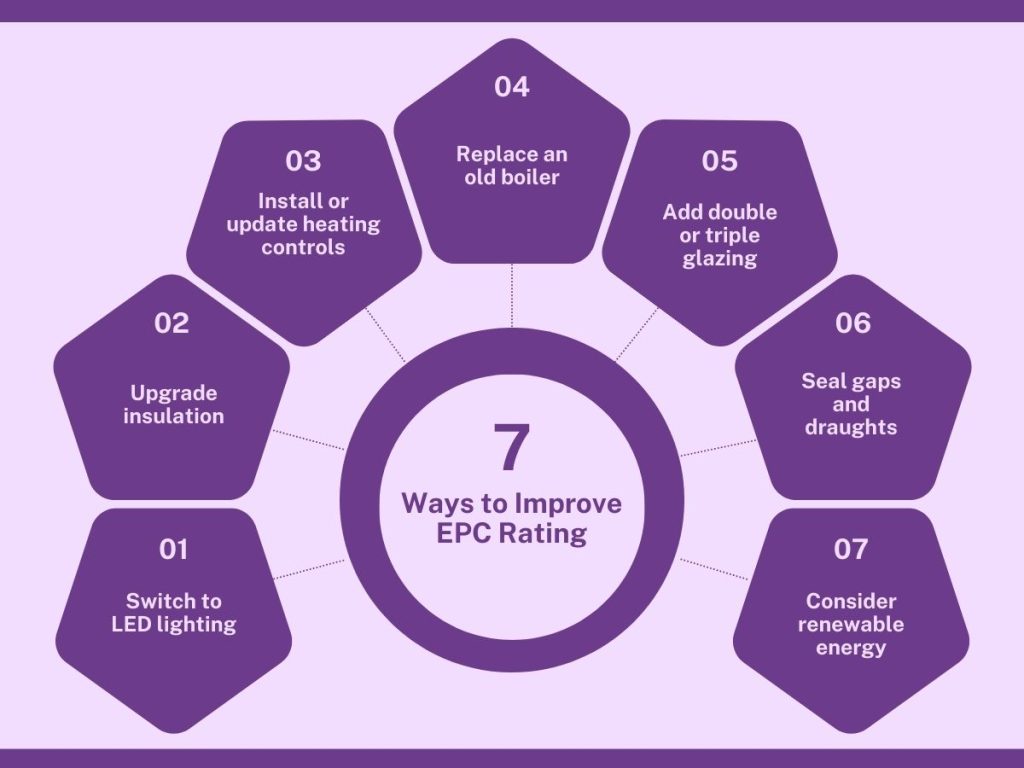
1. Switch to LED lighting
One of the simplest upgrades is replacing traditional bulbs with LEDs. LED bulbs are around 90% efficient, meaning most of the electricity they use is converted into light rather than wasted as heat. They can add 1–2 points to your EPC rating at a minimal cost of around £50–£150. This is an easy starting point for any property.
2. Upgrade insulation
Poor insulation leads to significant heat loss through walls, roofs, and floors. Upgrading loft insulation, adding cavity wall insulation, and sealing window or door gaps can reduce heating demand and raise your EPC score by up to 4 to 20 points. Well-insulated properties are more comfortable and less costly to run.
3. Install or update heating controls
Traditional heating systems often waste energy by heating unused rooms. Installing smart thermostats and thermostatic radiator valves (TRVs) allows tenants to control heat distribution room by room. This reduces energy waste and can improve your EPC by 2 to 4 points.
4. Replace an old boiler
Older boilers can waste up to 35 to 40% of fuel due to inefficient heat transfer. Replacing them with modern condensing boilers, which recover up to 90% to 94% of energy, may increase your EPC score by as much as 5 to 20 points and significantly reduce tenant heating bills.
5. Add double or triple glazing
Single-pane windows leak heat constantly, making it difficult to keep your property warm and causing energy bills to rise. Double or triple glazing adds extra layers of glass with insulating air pockets between them, which slows heat loss and holds warmth inside. This upgrade boosts your EPC rating by 5 to 10 points and helps tenants cut their heating costs.
6. Seal gaps and draughts
Small, tiny gaps around doors, windows, or floorboards can let heat escape. Simple draught-proofing products like weatherstrips, door brushes, or sealants make a noticeable difference. This simple upgrade can deliver quick EPC improvements by 1 point without major investment.
7. Consider renewable energy
Installing solar panels or heat pumps generates renewable energy onsite, reducing grid dependency. These systems can improve your EPC rating by up to 5 to 15 points and make the property more attractive to eco-conscious tenants.
You don’t need to carry out everything at once. Making just a few key improvements can raise your EPC rating, keep you prepared for upcoming rules, and provide a better living space for your tenants.
What Funding Options Are Available for EPC Improvements in Scotland?
The Scottish Government provides several energy schemes to make energy efficiency upgrades much more affordable. These include grants and interest-free loans for insulation, heating systems, glazing, and renewable installations.
Here’s a quick summary of the key support schemes available for landlords in Scotland:
| Scheme | Maximum Funding | Who Can Apply | What’s Covered | How to Apply |
| Home Energy Scotland | Up to £15,000 (grant + interest-free loan) | Homeowners & some landlords | Insulation, heating, glazing, solar panels, heat pumps | Apply through Home Energy Scotland |
| Warmer Homes Scotland | Up to £20,000 | Low-income owner-occupiers | Insulation, renewables, glazing, heating upgrades | Contact Home Energy Scotland |
| ECO4 Scheme | £7,000 to £20,000 | Low-income or benefit-eligible households | Insulation, efficient heating, renewables | Apply through an energy supplier or local council |
These schemes help reduce upgrade costs and make it easier to improve your EPC rating without placing financial pressure on landlords.
EPC Exemptions in Scotland
While there is currently no minimum EPC requirement, some properties may be exempt from needing an EPC entirely.
Common exemptions landlords should be aware of:
- Listed buildings where improvements would alter the character
- Detached or small buildings under 50m²
- Temporary buildings
- Properties scheduled for demolition
If your property qualifies, you’ll need to register the exemption to stay compliant and avoid penalties.
Steps To Register For An EPC Exemption In Scotland:
- Visit the Scottish EPC Register site
- Log in or create an account
- Provide property details and reasons for exemption in the form.
- Attach relevant documents.
- Apply and save your confirmation or reference number.
Registering the exemption keeps you legally protected and shows you’re meeting your responsibilities as a landlord. If you need assistance, organisations like Home Energy Scotland offer guidance throughout the process.
Penalties for Non-Compliance
Landlords in Scotland are legally required to provide a valid EPC when letting a property. Failing to do so can result in:
- A £500 fine (standard penalty)
Unlike England and Wales, there are no fines for renting properties with low EPC ratings (F or G). This highlights the importance of compliance without overestimating risks.
Final Thoughts: Make Your Rental Property Energy Efficient & Future Proof
Improving your EPC rating is one of the most impactful upgrades you can make as a Scottish landlord. While there is currently no minimum EPC rating requirement to let out a property, raising your score improves energy efficiency, increases tenant appeal, and protects your property’s long-term value.
By investing in insulation, modern heating systems, and simple upgrades like LED lighting and draught-proofing, you can significantly improve your EPC rating without high cost. With funding support available through Home Energy Scotland, it’s easier than ever to make your rental properties warmer, greener, and more attractive to tenants.
Not sure where to start? You can book a free EPC check through Home Energy Scotland or get in touch with Westport Property today.
Have A Question or Need Some Help?
Whether you're searching for the perfect rental property or a landlord wanting advice on letting, we're here to assist. Feel free to call our office or send us an email, and we'll be happy to help you with any queries you may have.
Frequently Asked Questions
Can I rent out a property with an EPC rating of F in Scotland?
Yes, you can. In Scotland, there is currently no minimum EPC rating required to rent out a property, so even homes rated F or G can be legally let. However, landlords must still provide a valid EPC when advertising or starting a tenancy.
What is the penalty for not having an EPC in Scotland?
If you fail to provide a valid EPC when renting out a property in Scotland, you can be fined up to £500. It’s important for landlords to ensure the certificate is in place to stay compliant with the law.
How can I improve my EPC rating on a budget?
You can make noticeable improvements without spending a lot by taking simple steps like adding loft insulation, fitting LED bulbs, sealing draughts, and installing basic heating controls. These small upgrades can significantly boost your property’s energy efficiency and EPC rating.
Do listed buildings need an EPC in Scotland?
Sometimes. If making energy efficiency improvements would change the character of a listed building, it may be exempt from needing an EPC. Each case is assessed individually, so exemptions are granted based on the property’s specific circumstances.
Is there a grant for landlords to improve EPC ratings?
Yes. Landlords can access loans and grants through Home Energy Scotland to fund energy efficiency improvements. In some cases, the ECO4 scheme may also apply, particularly if tenants meet certain eligibility criteria.
How long is an EPC valid in Scotland?
An EPC in Scotland is valid for 10 years. After that, landlords need a new assessment to ensure the property’s energy efficiency is up to date and compliant with the law.
How to calculate EPC rating
EPC ratings are calculated using the RdSAP method (Reduced Standard Assessment Procedure). Assessors consider factors like insulation, heating systems, fuel type, air leakage, ventilation, windows, and lighting efficiency. You cannot estimate or negotiate your score; only a qualified energy assessor can provide an official EPC certificate.
 Find a Property Sale/Rent
  Property Management
  Tenant Background Screening
  Asset Management