As a private landlord in Scotland, dealing with a tenant who stops paying rent, i.e., rental arrears, can be a challenging and stressful situation. According to recent GOV.UK data, nearly 5.3% of renters reported rent arrears during 2022 to 2023. This can be particularly stressful for landlords, especially if you rely on rental income to cover your mortgage or day-to-day costs. In Scotland, tenant protections are strong, and the legal landscape is distinct from other parts of the UK. Landlords need to understand their rights and responsibilities when dealing with rent arrears.
In this guide, I’ll walk you through the steps to take when a tenant stops paying rent, how to handle rent arrears, navigate the legal process, and protect your property under Scottish law. With the right approach, you can manage rent issues confidently while maintaining a smooth landlord-tenant relationship.
What are Rental Arrears?
Rental arrears, i.e., non-payment of rent, refers to rent that has not been paid by the due date stated in the tenancy or lease agreement. When a tenant fails to pay rent on time, the unpaid amount is considered to be in arrears and becomes an outstanding debt owed to the landlord.
When Do Rental Arrears Occur?
When a tenant misses a rent payment, they are considered to be in arrears from the very first day the rent payment becomes overdue. As a landlord, this means you are dealing with rent arrears immediately; even if the tenant later pays the missed rent, the period of arrears is still considered. Rental arrers occur when:
- The tenant does not pay rent by the due date as set out in the tenancy agreement.
- The rent remains unpaid for a certain number of days after the due date. For example, some tenancy agreements or local regulations allow a short grace period, such as a few days after the due date, after which landlords may issue notices of overdue rent.
- The tenant consistently misses payments or pays late, causing a cumulative outstanding balance.
Common causes of rental arrears often come down to financial difficulties, such as job loss, unexpected expenses, or irregular income, which can quickly affect a tenant’s ability to pay on time. In other cases, arrears can happen because of simple miscommunication about payment dates, banking issues, disputes over property maintenance, or benefit overpayment adjustments that reduce the rental support expected to be received.
Landlords’ Rights in Scotland When a Tenant Is Not Paying Rent
In Scotland, tenants must make rental payments as outlined in the tenancy agreement. Rent is considered late if unpaid by the due date and becomes serious arrears after three consecutive missed payments. If rent remains unpaid for three months or more, you can issue a Notice to Leave and take legal action through the First-tier Tribunal for Scotland.

Under the Private Housing (Tenancies) (Scotland) Act 2016, landlords have the right to:
- Receive rent on time.
- Recover unpaid rent legally.
- Repossess the property for persistent non-payment.
Having clear lease terms helps prevent disputes, while understanding legal protections ensures you take the right steps when dealing with rent arrears.
What to Do When a Tenant Stops Paying Rent
Dealing with a situation where a tenant is not paying rent can be frustrating for any landlord, but it’s important for you to stay calm and follow a clear, legal process. Taking the right steps early can help prevent the problem from escalating and protect your property. Here’s a step-by-step guide on what to do if your tenant stops paying rent:
1. Review the Tenancy Agreement
Go through the tenancy agreement in order to verify if the rent is actually late. In a tenancy agreement, you can find everything related to rent payments, late fees, and the procedure for handling late payments or non-payment. You should check that both you and your tenant are in compliance with the lease terms and are aware of what you can and cannot do according to the agreement.
Key Points to Review in the Tenancy Agreement:
- Rent payment schedule: Confirm the due dates for rent and the agreed-upon payment methods.
- Late payment provisions: Check whether the agreement includes any clauses or penalties related to late rent.
- Notice requirements for arrears: Most agreements specify the procedures to follow when rent payments are overdue.
2. Communicate with the tenant
Try to contact the tenant as soon as possible, either by phone or email, to talk about the rent arrears. Keep your tone polite and professional, and avoid anything that could come across as threatening or harassing. You should follow all legal requirements, including providing proper notice before entering the property.
Ask whether the tenant is dealing with temporary financial hardship. If they are struggling, you can point them towards the local housing associations, council housing services, or other types of financial support. It may also help to encourage them to share relevant financial documents, such as bank statements, so you can better understand their situation and see whether they might qualify for additional support, including the housing element of Universal Credit. The aim is to keep communication open and work towards a fair and practical solution.
3. Issue a Formal Notice
When a renter fails to respond to informal communication or refuses to make the necessary rent payments, you can proceed by issuing a formal notice. In Scotland, the process is more regulated than in other parts of the UK, and landlords must adhere to the rules under the Housing Act.
What Type of Notice to Serve:
- Notice of Rent Arrears: When a tenant falls behind on rent, a formal notice should be served. This notice informs the tenant of the arrears and demands payment.
- Eviction Notice: If the rent arrears are significant and there has been no resolution, you can issue an eviction notice. Under the Private Residential Tenancy (PRT), you need to provide tenants with 28 days’ notice to either pay the arrears or vacate the property.
It’s important to note that you cannot evict a tenant without a valid reason, such as failing to pay rent or causing damage to the property.
4. Offer a Repayment plan
Consider offering the tenant a payment plan before you move forward with any eviction action. This can be particularly helpful if they’re going through temporary financial difficulties. By agreeing on a structured repayment plan, you give them the opportunity to catch up on missed rent over time, while continuing to receive payments and work towards resolving the arrears.
Make sure that any payment arrangement is in a written form, specifying the amount to be paid, the frequency, and the duration of the payment plan. This ensures both parties are clear on expectations and helps protect you in the event of further issues with the tenant.
5. Look for a solution
Depending on the circumstances of the tenant, you may need to find a mutually agreeable solution, such as:
- Offer a Temporary Rent Reduction: Offer the tenant a temporary rent reduction if they are experiencing a tough time, but are expected to recover soon. This helps ease their financial burden until they are back on track.
- Involve the Guarantor: If the tenant has or needs a guarantor, you can involve them in the discussions. They may be able to provide support in addressing the rent payment issue, either by helping the tenant financially or by offering advice on how to handle the situation effectively.
6. Contact your insurer
If you have landlord insurance, contact your insurer to make sure your income is covered if your tenant falls into rent arrears. They can advise you on how to claim the money you’re owed under the terms of your policy, as well as how to proceed.
If the tenancy ends with outstanding rent, you can request that any unpaid rent be deducted from the tenant’s deposit.
7. Seek Legal advice and mediation
Consider seeking legal advice in case the tenant stops paying rent and refuses to cooperate with you. Organisations such as Citizens Advice Scotland and Shelter Scotland can help with debt advice and legal support for both landlords and tenants. They can provide guidance on your next steps and help you to navigate the legal process.
In some cases, mediation services can be helpful. Mediation allows both parties to communicate and resolve issues without resorting to legal action. Many housing associations and local councils provide mediation services for landlords and tenants.
8. Begin court proceedings for Eviction
There are various courses of action the court can take. When resolving the issue through communication, repayment plans, or mediation fails, eviction may become the only option. The eviction process is governed by strict rules, and you must follow the correct procedures to avoid any legal consequences.
Steps for Eviction:
- Serve a Notice of Proceedings: Before filing for an eviction order, a notice of proceedings is served. This notice gives the tenant a final chance to pay the arrears or reach a payment agreement. The notice must clearly state that you are taking legal action if the arrears are not settled.
- Apply to the First-Tier Tribunal: If the tenant still fails to pay, you can apply to the First-Tier Tribunal, which acts as the eviction court in Scotland. The tribunal will consider the case and schedule a hearing. It may issue an eviction order depending on the circumstances.
- Eviction Order and Sheriff Officers: If the tribunal rules in your favour, they will issue an eviction order. You then need to enforce the order by employing sheriff officers, who carry out the eviction.
Remember, eviction should always be the last resort, as it can be costly, time-consuming, and stressful. In some cases, the tenant may be eligible for temporary accommodation through the local council if they are facing homelessness due to eviction.
9. Recover Unpaid Rent
Recovering unpaid rent is not always a straightforward process, especially if the tenant has no assets. However, there are a few ways you can attempt to recover the outstanding rent:
- Claim via the Sheriff Court: You can take the tenant to court and claim for the outstanding rent owed. The court may issue a judgment requiring the tenant to pay the arrears, including any applicable court fees.
- Tenancy Deposit Scheme: If the tenant has not paid their security deposit, you may be able to recover some or all of the arrears from the deposit through a tenancy deposit scheme.
- Debt Collection Agencies: In some cases, landlords may resort to using a debt collection agency to recover the tenant’s arrears.
Things Landlords Can’t Do If Tenants Stop Paying Rent
Dealing with a tenant not paying rent and not responding to it can be frustrating, but you need to try to remain cool and calm. You should follow legal procedures, typically issuing formal notices, such as late rent or pay-or-quit notices. You shouldn’t take any action in a hurry that violates the tenant’s rights and causes you trouble. Here are some things you cannot do as a landlord if the tenant stops paying rent:
- Enter the rental property without proper legal notice or tenant permission.
- Harass or threaten tenants to force payment.
- Evict tenants without following the legal eviction process, which usually requires written notices and possibly a court order.
- Confiscate tenant belongings or take other illegal self-help actions.
- Shut off utilities or lock tenants out to force payment.
Landlords should respect tenant rights and comply with all applicable housing and tenancy laws throughout the process.
How Landlords Can Protect Themselves from Rent Arrears
To effectively protect rental income and reduce the risk of arrears, landlords should take several proactive steps:
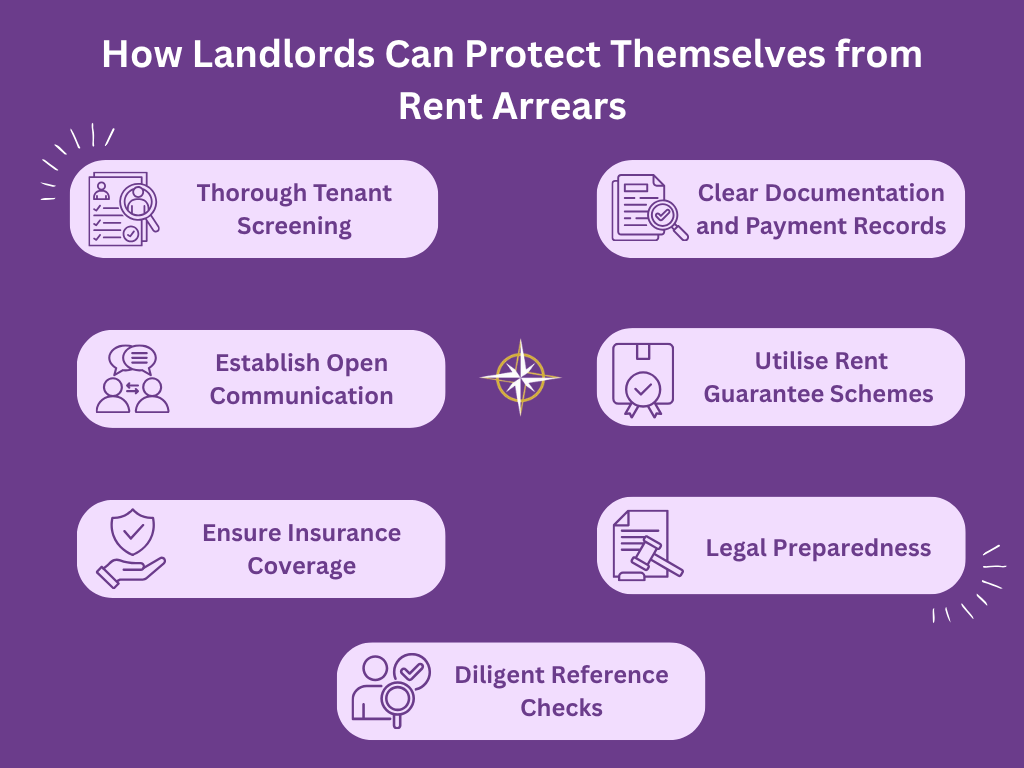
- Thorough Tenant Screening: Always conduct comprehensive background checks, including rental history, employment verification, and credit assessments. A reliable tenant is the first step in preventing arrears.
- Clear Documentation and Payment Records: Maintain accurate records of rent payments, outstanding balances, and all tenant communications. This includes keeping track of the documents needed to rent a property, as they can serve as important evidence if legal proceedings arise.
- Establish Open Communication: A strong landlord-tenant relationship fosters transparency and encourages tenants to communicate financial difficulties before arrears accumulate.
- Utilise Rent Guarantee Schemes: These provide landlords with financial protection in the event of non-payment, ensuring consistent cash flow and reducing financial strain.
- Ensure Comprehensive Insurance Coverage: Review landlord insurance policies to include rental income protection, offering a safety net in case of tenant defaults.
- Legal Preparedness: Stay informed about local tenancy laws and have clear clauses regarding arrears and eviction procedures within the tenancy agreement.
- Diligent Reference Checks: Verify previous landlord references and employment details to ensure prospective tenants have a history of responsible financial management.
By implementing these measures, landlords can mitigate the risk of rent arrears and protect their rental income.
Conclusion:
Dealing with a tenant who stops paying rent can be a stressful and challenging experience for landlords. However, understanding the legal procedures, maintaining open communication, and taking immediate action can significantly increase the likelihood of resolving the issue effectively while safeguarding your rights and interests.
Prevention plays a crucial role. By implementing thorough tenant screening processes, drafting comprehensive tenancy agreements, and fostering positive relationships with tenants from the beginning, you can reduce the risk of encountering payment issues.
If you find yourself in a difficult situation with a non-paying tenant, seeking professional assistance from a qualified landlord-tenant lawyer or a property management company like Westport Property can provide valuable support. At Westport Property, we can help you navigate the complexities of the rental arrears and eviction process in Scotland, UK, while minimising potential legal and financial risks.
Have A Question or Need Some Help?
Whether you're searching for the perfect rental property or a landlord wanting advice on letting, we're here to assist. Feel free to call our office or send us an email, and we'll be happy to help you with any queries you may have.
Frequently Asked Questions
What is the longest you can be late on rent?
The longest a tenant can be late on rent depends on the rental agreement and lease terms. Typically, landlords may begin formal actions after 14 days of missed payments, but legal steps, including issuing an eviction notice, can be taken after two months of unpaid rent.
How long does it take to evict a tenant for nonpayment of rent UK?
The eviction process for nonpayment of rent can take several months. It begins with issuing an eviction notice (such as Section 8 Notice or Notice to Leave), giving the tenant 14 to 28 days to pay or vacate. If the tenant doesn't comply, the landlord must apply for an eviction order in court, which can take additional weeks or months for enforcement.
Can you deduct unpaid rent from the tenant’s deposit?
Yes, landlords are permitted to deduct unpaid rent from a tenant’s security deposit, as long as this is specified in the tenancy agreement and the landlord can provide proof of the outstanding rent. However, the deduction must be justified, and the landlord must follow the legal process for handling deposits according to the relevant laws in their jurisdiction.
Should you evict a tenant who is in arrears?
In the UK, eviction for rent arrears should be considered a last Option. Landlords are encouraged to communicate with tenants to discuss repayment plans before taking legal action. However, if communication fails and arrears persist, eviction may become necessary. To evict a tenant, landlords must follow the correct legal procedures, including serving a Section 8 notice and, if needed, obtaining a court order for possession. This process does not apply in Scotland, which follows its own laws under the Housing (Scotland) Act 1988 and the Private Residential Tenancies (Scotland) Act 2017.
How can mediation help with rent arrears?
Mediation provides a neutral platform for landlords and tenants to openly discuss issues related to rent arrears and negotiate mutually agreeable repayment plans or other solutions. By facilitating communication, mediation can help both parties reach a settlement without resorting to legal action or eviction, potentially saving time, hassle, and costs.
What to do When a Tenant Misses a Rent Payment?
If a tenant misses a rent payment, landlords should promptly contact the tenant to discuss the reason for the missed payment and offer the opportunity to set up a repayment plan. It's important to document all communication, explore options like involving the guarantor or seeking debt advice, and, if necessary, consider legal action after all efforts to resolve the issue have been made.
How Can a Landlord Legally Evict a Tenant For Not Paying Rent?
To legally evict a tenant for non-payment of rent, landlords must follow proper procedures. In England, this typically involves serving a Section 8 notice, while in Scotland, eviction is governed by the Housing (Scotland) Act 1988 and the Private Residential Tenancies (Scotland) Act 2017. Landlords must provide a written notice, apply to the court, and, if needed, obtain a possession order and a warrant before the tenant can be removed.
 Find a Property Sale/Rent
  Property Management
  Tenant Background Screening
  Asset Management